

Understand / What actually happens?
Follow a request from first contact to follow-up. Listen to the people doing the work and identify where information repeats or a step gets stuck.
Every business has its own way.
The system should understand it.
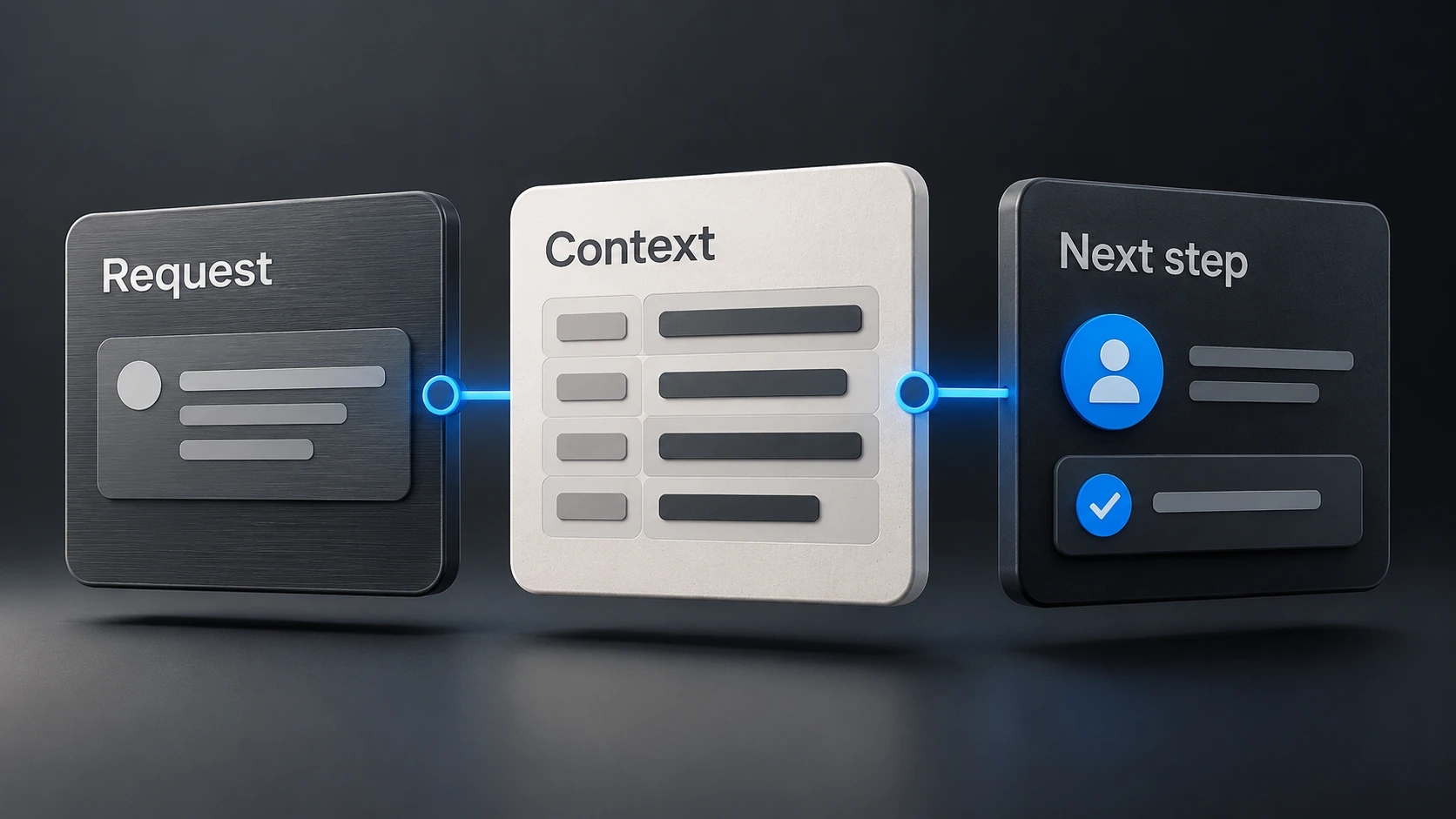
Before we build, we learn how the work actually gets done. Where time goes, where information gets stuck, and what needs to change.
We connect systems, information, and teams. Each part has a clear responsibility, and information has a path from the first interaction to the next step.
What works today should leave room for tomorrow. We review the experience and test the agreed journey so the next stage builds on a clear foundation.
Follow a request from first contact to follow-up. Listen to the people doing the work and identify where information repeats or a step gets stuck.
Agree on the first workflow, the information it needs and each role’s permissions. Make the initial scope clear and identify what belongs in a later stage.
Shape the experience around understandable steps and clear states. Review the language, exceptions and handoff to the appropriate person.
Test the agreed workflow with representative cases. Review what happens when information is missing or a request needs approval.
We assign roles around the work. The system can help gather and organize information and carry out authorized steps. The team remains involved in professional judgment, exceptions and the approvals the workflow requires.
We treat each business as a distinct context. A client’s needs can help us improve the product while their data, permissions and working rules remain within their own boundaries. How this design principle is implemented is defined for each project.
Start with one request that is difficult to follow or a step that repeats every day. Tell us who receives it, what they need to know and where it stops. One example gives us a useful place to understand the wider picture.